 Geobru catalogue
irregular
Type of resources
Available actions
Topics
INSPIRE themes
Keywords
Contact for the resource
Provided by
Years
Formats
Representation types
Update frequencies
status
Service types
Scale
Resolution
-
This view service allows, by means of a formatted URL, to display the dataset related to the built density of urban blocks within the territory of the Brussels-Capital Region.
-
These map layers provide a detailed representation of archaeological sites from prehistory to the 18th century and enable efficient management of regional preventive archaeology. Archaeological Atlas : These map layers list archaeological sites and discoveries as well as an expansion zone of human settlements around the main remains. Archaeological and Historical Inventory : These map layers present the thematic inventory of a series of sites confirmed by archaeology and historical sources (monasteries, monastic refuges, breweries, cellars…).
-
This download service allows, by means of a formatted URL, to download any object of dataset features related to the built density of urban blocks within the territory of the Brussels-Capital Region.
-
This view service allows, by means of a formatted URL, to visualize data from the maps of the Brussels port area. This service is not intended for navigation purposes.
-
This dataset corresponds to the updated list of Belgian municipalities belonging to an urban region, based on the analysis published in IBSA Report No. 17. The data covered by this dataset range from 2021 to 2025, and the municipal boundaries are those of 2025.
-
These map layers include the perimeters of programs and urban renewal operations financed by the Brussels-Capital Region (sustainable neighborhood contracts, urban renewal contracts) as well as the current preemption perimeters.
-
These various map layers are essential for the effective management of cultural heritage (real estate) in the Brussels-Capital region. They enable authorities and stakeholders to monitor, protect, and promote this valuable cultural legacy. Protected Properties: This map layer displays the locations of cultural properties that are officially protected by the relevant authorities. Protection Zones: This map layer shows the designated protection zones around the protected properties.
-
This layer shows the locations of monuments, ensembles, trees, and sites listed in legal inventories.
-
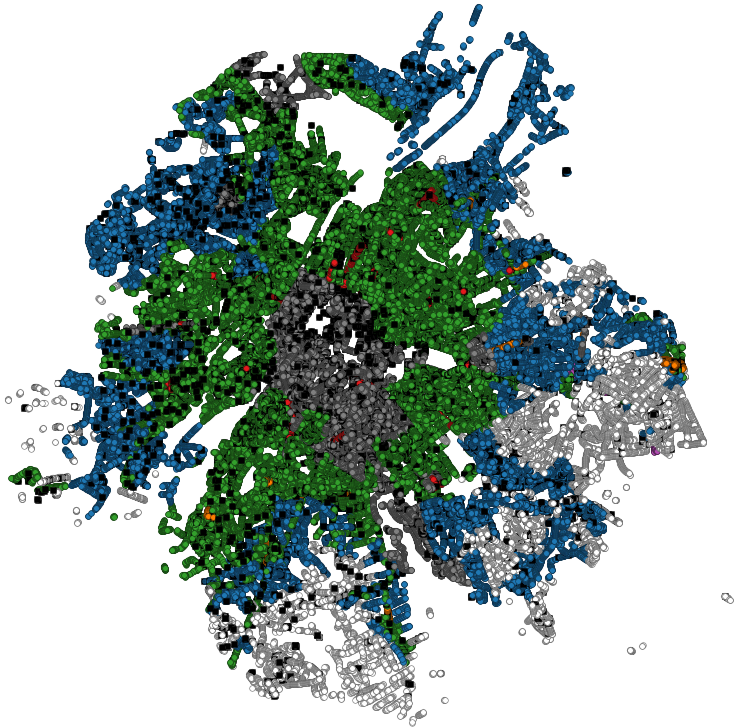
This dataset contains the on-street parking supply in the Brussels-Capital Region, categorised by type of reglementation, orientation and situation.
-
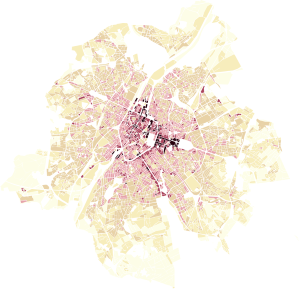
This dataset represents the built density of urban blocks within the territory of the Brussels-Capital Region. It provides four indicators: the floor space index (FSI), the ground space index (GSI), the average number of storeys, and the maximum building height.